The Body's Forgotten Messenger: The Neck

Updated: Jul 20
When people think about body language, they almost always think about the face. We devote enormous attention to smiles, eye contact, eyebrows, and facial expressions. Yet, just a few inches below the face lies one of the most revealing—and most overlooked—parts of the human body: the neck.

Throughout my career studying nonverbal communication, I have found that the neck often reveals emotions the face successfully conceals. A practiced smile can hide disappointment. A controlled expression can mask anxiety. A poker face may disguise uncertainty. But the neck is remarkably honest. It reacts automatically to stress, fear, embarrassment, attraction, uncertainty, and even relief.
If you truly want to understand what another person is experiencing, don't stop at the face. Learn to observe the neck.
Why the Neck Matters
The neck deserves our attention not only because of what it communicates, but because of what it is.
It is one of the most vital structures of the human body. It is the narrow corridor connecting the brain to everything below it. Every nerve impulse traveling from the brain to the body—and back again—must pass through this relatively slender passageway. The spinal cord, major arteries and veins, the trachea carrying air to the lungs, and the esophagus transporting food all share this remarkably compact space. And not just that, the Vaus nerves, so critical to the enteric nervous system, innervate the throat area as well as distal parts of the facial nerve, making the throat area highly sensitive to emotional moods.

Every breath you take, every sip of water, every meal you swallow depends upon the structures housed within your neck. From an evolutionary standpoint, this made the neck one of the most vulnerable parts of our anatomy. A serious injury here threatened breathing, blood flow, and the nervous system itself. Our ancestors, archaic humans, who instinctively protected this area were more likely to survive than those who did not.
Because of that, our brains have evolved to monitor the neck with extraordinary vigilance. Whenever we experience fear, uncertainty, embarrassment, excitement, or emotional stress, the neck often becomes one of the first areas of the body to respond.
Over the years, I have noticed an important principle of human behavior. Areas of the body richly supplied with nerves and blood vessels tend to be especially expressive of our emotional lives. The face is one example. The hands are another. The neck certainly belongs on that list.
When Emotion Rises, So Does the Blood
Think about what happens when someone becomes embarrassed. Many people don't simply blush on the cheeks. The redness often spreads downward across the neck and onto the upper chest. This is not something people consciously choose to do. It is controlled by the autonomic nervous system, which increases blood flow in response to emotional stimulation.
Some people blush when unexpectedly complimented. Others blush when criticized. Some redden when suddenly asked to speak before a group. Others blush simply because someone they admire has walked into the room. The important point is that the neck faithfully broadcasts emotional arousal, often before the face fully reveals it and certainly before anything is said.
As observers, however, we must be careful. Blushing does not indicate guilt. It indicates emotional activation. The emotion may be embarrassment, attraction, surprise, anxiety, or even anger, and that is all we can say when we see the skin blush.
Thirty Muscles Working Together
Most people never consider how much anatomy is packed into the neck. There are approximately thirty muscles responsible for supporting, rotating, flexing, extending, and stabilizing the head. Together they support a structure weighing roughly ten to twelve pounds while allowing us to look up, down, sideways, and over our shoulders with remarkable precision.
Among the largest are the sternocleidomastoid muscles, extending from just behind each ear to the collarbone. When people become anxious, fearful, or highly alert, these muscles frequently become more pronounced. The neck stiffens. Movement becomes less fluid. The shoulders rise. The head appears more rigid. While many observers search for tension in the face, I often find it first in the neck. The body is quietly preparing itself for action.
The Remarkable Platysma
One of the most fascinating muscles in the human body is also one of the least discussed.
The platysma is a broad, thin sheet of muscle lying immediately beneath the skin over the front and sides of the neck that go right up to the corners of the mouth. Under ordinary circumstances it is barely noticeable. But during moments of intense emotional arousal it can become strikingly visible.

When someone experiences sudden fear, horror, profound anxiety, or intense distress, the platysma contracts forcefully. Vertical bands appear beneath the skin. As the skin tightens, the jaw may become rigid, and the corners of the mouth are often pulled downward. These bands stretch from just below the jaw line all the way down to the clavicle.
This is part of the body's defensive response.
You can observe this when someone grimaces or tightly clenches their teeth together. Try it out, stand in front of a mirror and grimace my compressing the teeth tightly together bringing the corners of the mouth down. You will see the platysmal bands tighten around your throat area. You may also see it in others when they react to bad news or parents watching their daughter perform a dangerous move in gymnastics.
The beauty of platysma contractions is that it is largely involuntary. It accompanies real activation of the autonomic nervous system and so are highly reliable in signaling when someone is stressed. In fact, years ago while interviewing three individuals about a crime, I noticed something remarkable. I mentioned that I had spoken with a witness who had provided us with a good description of one of the perpetrators. The moment I said the word witness, one of the three individuals reacted—not with the face, but with the neck.
Their facial expressions remained composed, giving nothing away. But on one individual, thin vertical bands suddenly appeared along the front of his neck. His platysma muscle had contracted so forcefully that it immediately drew my attention to the stiffened bands from his neck to under his jaw. While everyone else seemed outwardly calm, his neck betrayed a surge of emotion.
I turned my attention to him first and asked whether he had seen anything. He replied, "No," but his voice cracked as he spoke. His neck had already announced what his face tried to conceal. In the end, that emotional reaction proved significant. It reflected, as it turned out, guilty knowledge, and he later accepted responsibility for his role in the crime.
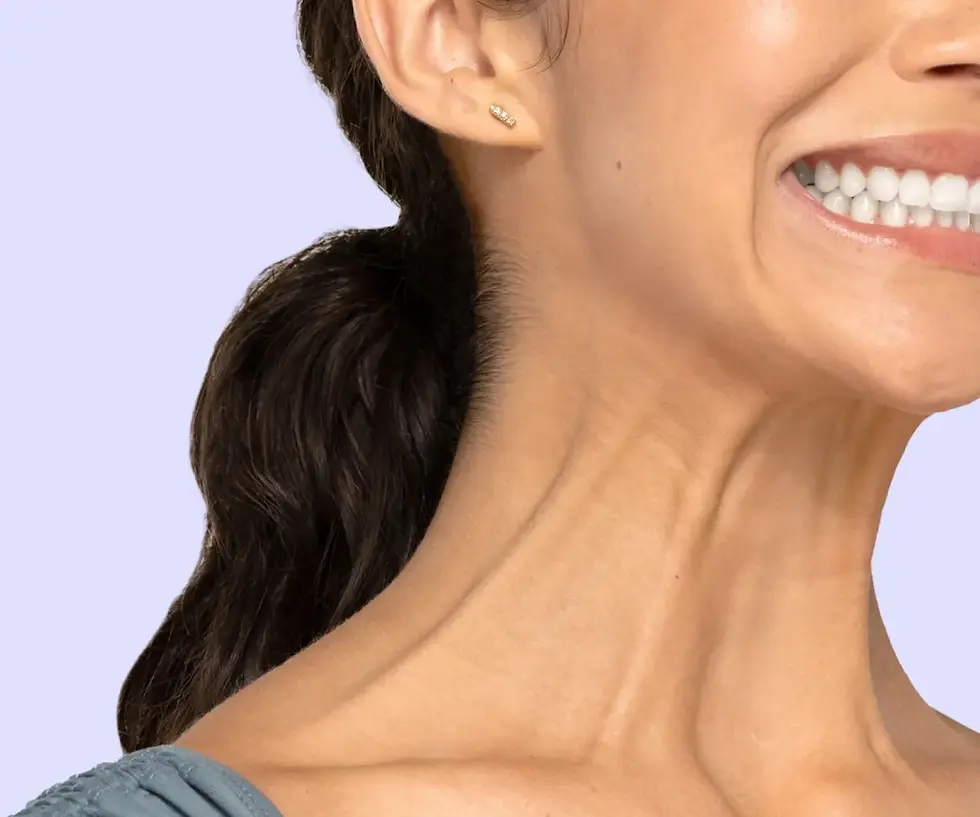
Whenever I see the platysma strands suddenly emerge, I immediately know that the individual is experiencing significant emotional arousal. It is one of the body's most honest signals and one I highly depend on.

The Silent Language of Swallowing
One of the most overlooked behaviors involving the neck has nothing to do with muscles.
It involves swallowing. Most of us never think about swallowing until something interferes with it. Under normal circumstances we swallow effortlessly hundreds of times each day.
Stress changes that. When the sympathetic nervous system becomes activated, saliva production often decreases. The mouth becomes dry. We've all experienced it. You are suddenly called upon to speak before a large audience, or you receive troubling news and instantly your mouth feels dry.
As saliva diminishes, swallowing becomes more frequent and more noticeable. The act of swallowing compels the production of saliva. As this takes place, under stress, you can actually watch the larynx (laryngeal prominence) commonly called the Adam's apple, move as the individual repeatedly attempts to moisten the throat.
During my years with the FBI, I often watched people after asking a particularly sensitive question. Before they answered, many would swallow. Sometimes once. Sometimes several times in rapid succession. Popular culture tells us this means a person is lying. It doesn't. What I was observing was not deception—it was physiology. Their mouth had gone dry because their autonomic nervous system had shifted into a state of heightened arousal especially when I was asking very specific questions that threatened exposing an individual’s culpability.
By the way, this is where many people make a serious mistake. They assume frequent swallowing means deception. It does not. What it indicates is emotional stress. That stress may arise because the person fears being misunderstood. It may result from embarrassment, sadness, anxiety, uncertainty, or concern. It may even reflect excitement. Stress, once more. is not deception.
Why We Touch Our Neck
Another behavior I have observed countless times is neck touching. People rub the side of the neck. Massage the back. Scratch beneath the ear. Adjust a collar. Play with a necklace. Press their fingertips into the muscles. These are not random habits. They are pacifying, self-soothing (adaptive) behaviors. (See my article on why we touch our faces so much.)
Pacifiers are actions that help calm us after experiencing psychological discomfort. The neck contains abundant sensory nerve endings and of course the all-important Vagus nerve which responds to gentle stroking to calm us down. Gentle stimulation provides a soothing effect, helping reduce the body's stress response. I've watched executives massage the backs of their necks after hearing disappointing financial news. Students do it while awaiting examination results. Parents do it while waiting for a child who is overdue. Suspects do it during interviews but so do victims as they retell what happened to them. Doctors do it after delivering difficult diagnoses. We all do it because we are human. The behavior is universal. It helps us cope with stress. More stress more neck touching and massaging.
When we feel threatened, uncomfortable, insecure, or fearful, we will often cover our necks or vigorously massage our necks. Women in particular will cover the lower part of the neck, especially the suprasternal notch (neck dimple), which often accurately reflects those negative emotions.


Protecting the Throat
Because the throat is so vulnerable, human beings instinctively protect it. Notice what happens when people suddenly feel uncomfortable. A hand rises to the throat. Someone adjusts a tie. A collar is straightened. A scarf is pulled closer. A necklace is touched. Even the simple act of buttoning the top button of a shirt after entering a stressful meeting may reflect this ancient protective instinct.
Millions of years before neckties existed, exposing the throat carried risk. Protecting it increased the chances of survival. The brain processes signals that indicate concern and we are often prone to cover the neck immediately without giving it any thought. Even at a soccer game you will see people covering their neck as they show their concern over a penalty kick. Our modern behaviors still reflect those ancient instincts buried deep in our paleo-circuits which we pass on through our DNA.
The Carotid Pulse
Occasionally, especially in lighter-skinned individuals or those with slender necks, another fascinating phenomenon can be observed. The carotid artery becomes visibly active. The carotid arteries carry oxygen-rich blood from the heart to the brain. During periods of emotional arousal, the heart beats faster and more forcefully under the influence of adrenaline. Sometimes the pulse becomes visible in the neck. You may notice a rhythmic throbbing just below the angle of the jaw or along the side of the neck. This is not a body language gesture in the traditional sense. It is physiology made visible. The individual cannot control it. I have occasionally observed this during emotionally charged interviews, after startling announcements, or immediately before someone was about to speak publicly.
Like increased swallowing, it does not reveal deception. It reveals activation of the sympathetic nervous system. The body is preparing itself to respond and that arousal we can sometimes see in the carotid pulse.
Confidence Leaves the Neck Exposed
The neck also communicates confidence. People who feel secure tend to expose the neck comfortably. Their shoulders remain relaxed. Their head stays upright. Their movements are fluid. The muscles perform their work quietly without unnecessary tension. Compare that with someone who feels intimidated. The shoulders creep upward. The chin lowers. The neck appears shorter. Movement becomes restricted. Without conscious awareness, the body attempts to shield one of its most vulnerable regions. You can often distinguish confidence from insecurity without hearing a single word.
A Canvas for Identity
Human beings have always decorated the neck. Across cultures we adorn it with necklaces, medals, flowers, religious symbols, scarves, ribbons, and precious stones. In Hawaii, flower leis symbolize welcome, affection, and respect. Military decorations worn around the neck signify courage and honor. Religious pendants communicate faith. Today, elaborate tattoos transform the neck into a canvas for personal identity. Even our ideas of beauty involve the neck. Ballerinas are admired for long, graceful necks that project elegance and poise.
Athletes often develop thicker, muscular necks that communicate strength and resilience.
Although every neck is unique, we instinctively notice its posture, movement, and appearance because it contributes significantly to our impression of another person.
The Neck Rarely Lies
One reason I have always been fascinated by the neck is that it serves as a bridge between physiology and psychology. What we think and what we feel often appear there almost instantly. Embarrassment produces flushing. Fear tightens the platysma. Stress stiffens the muscles. Anxiety increases swallowing. Discomfort encourages self-touching. Insecurity protects the throat. Adrenaline strengthens the carotid pulse. Confidence leaves the neck relaxed and exposed. These reactions occur largely outside conscious awareness, making them among the most reliable nonverbal behaviors we can observe. That does not mean we should leap to conclusions. Someone may rub their neck because they slept awkwardly. A person may swallow frequently because the room is dry. An athlete's neck muscles may be prominent simply because of years of training. As with every aspect of nonverbal communication, context is king, but for me the neck reveals so much.
Final Thoughts
The next time you find yourself observing people—in a meeting, during a difficult conversation, while interviewing someone, or simply waiting in an airport terminal—look beyond the face. Notice whether the neck is relaxed or tense. Watch for flushing. Observe repeated swallowing. Pay attention to protective gestures. Notice self-soothing touches. Look for the platysma strands suddenly appearing or the subtle pulse of the carotid artery during moments of emotional intensity. They are there waiting to be observed.
You may be surprised at how much emotional information has been there all along, quietly communicating beneath the chin. The face may capture our attention, but the neck often reveals what the face is trying to hide. It has been faithfully communicating our emotions throughout human history. We simply have to remember to look.
After spending a lifetime studying people, the face says a lot but so does the neck. While the face can be rehearsed and mask certain feelings, the necks blushing, swallowing, and tightening of muscles, is a reminder that the body often speaks first. We simply have to learn its language.
Copyright © Joe Navarro 2026
Additional reading:


Comments